AI Adoption for Senior Living Key Takeaways:
- AI use among senior living operators rose from 9% in 2024 to 36% in 2025, yet only 33% of not-for-profit providers have a formal data governance program.
- Most AI is working behind the scenes: data integration, scheduling, documentation and fall detection.
- Start with one measurable problem, check your network and data, then run a 60 to 90 day pilot.
- Operators get stuck on thin IT capacity, disconnected vendors and security risk more than on the AI itself.
- Keep staff in the loop and settle security, privacy and vendor agreements before you scale.
In 2024, only 9% of senior living operators said they used AI tools. A year later, LifeLoop’s follow-up survey put that figure at 36%, with another 35% planning to start soon. Few industries move that fast, and most communities still have no clear plan for it. This guide walks through adoption of AI in senior living communities one step at a time, starting with where the industry stands today.
Where AI Adoption in U.S. Senior Living Stands Today
- AI adoption in U.S. senior living is rising, though unevenly. Argentum and A Place for Mom surveyed more than 1,000 operators and executives and found that 76% of leaders expect AI to have a positive or transformative effect. Enthusiasm runs ahead of depth.
- A LeadingAge and Ziegler CAST survey found more than 60% of not-for-profit providers use Microsoft Copilot and over 35% are experimenting with ChatGPT. Yet nearly 80% said AI knowledge sits with only a few people, and just 33% have a formal data governance program. AI adoption across senior living has plenty of curiosity and thin foundations.
How Is AI Being Used in Senior Living Communities?
- Mostly behind the scenes. In Senior Housing News’ 2026 CTO survey, 68% named data integration as the top AI use case, and 77% said operational efficiency was the top reason to launch new technology projects.
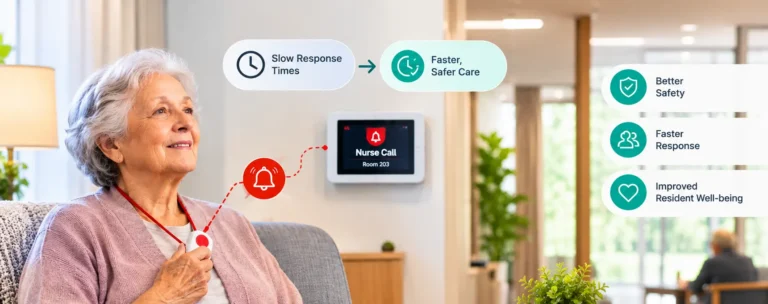
- On the ground, AI flags falls faster, automates admissions follow-up and scheduling, drafts routine documentation and reports, and monitors systems so problems surface before anyone calls the help desk.
- That is how AI is transforming senior living operations right now: it hands hours back to caregivers who currently spend them on paperwork. With every Baby Boomer reaching 65 or older by 2030, those hours matter.
What Is the AI Adoption Rate in the US?
- Some national context helps. The Census Bureau’s Business Trends and Outlook Survey tracks AI use among American employers every two weeks.
- Press coverage of its latest releases shows use climbing from 17.7% in January 2026 to 24.6% in the 5 to 18 October wave, with 28.6% of firms expecting to use Across U.S. businesses overall, AI use sits near one in four.
- Senior living operators reported higher figures in the LifeLoop survey, though the two studies define “use” differently, so treat the comparison loosely.
Where Operators Get Stuck Before AI Delivers
Staffing pressure makes the case for AI. These gaps decide whether it works:
- Thin IT capacity. Few multi-community operators have an internal team deep enough to run AI pilots alongside daily support.
- Vendor sprawl. Point solutions that don’t integrate create the data problem that tops the CTO survey.
- Security exposure. Every new tool widens the attack surface, and healthcare data is a prime ransomware target.
- Downtime risk. AI alerts and nurse call depend on reliable connectivity, so an outage becomes a safety and compliance issue.
- Scaling across sites. A pilot that works in one community is hard to standardize across the rest.
A Step-by-Step Plan for Adopting AI in Senior Living Communities:
- Pick one problem with a number attached. Choose something measurable, such as hours spent on admissions follow-up, average call-light response time or documentation minutes per shift. Set the success metric before you choose a tool.
- Check your foundation. AI needs dependable Wi-Fi, connected systems and clean data. Audit your network, nurse call and EHR integrations first.
- Run a 60 to 90 day pilot in one community. A small test shows results fast and limits risk.
- Keep people in the loop. Staff should validate every AI alert before action. Family conversations, escalations and compliance decisions stay with humans.
- Train your team and tell residents. Staff who understand what AI does, and what it doesn’t, are what make a pilot stick. Give caregivers a clear way to flag problems. Then keep residents and families informed. AARP’s 2026 survey found 41% of people aged 70 to 79 and 37% of those over 80 use or are interested in AI, so residents are often more open than leaders assume.
- Lock down privacy and compliance. Regulatory compliance is the top AI concern for 41% of operators. Confirm business associate agreements with vendors and map where resident data travels.
Review, then scale. Compare results to your metric, fix what slipped and extend the winner to your next community.
AI Companions for Seniors: What Operators Should Vet First
- Once your operations pilot is running, resident-facing requests tend to follow. Residents and families may ask for AI companions or bring devices in on their own.
- Before any device reaches a resident, your team needs answers to four questions: where does resident data go, how is the device secured on your network, who supports it when it fails, and does it fall under your business associate agreements? Without those answers, your IT team inherits an unmanaged device.
Start Your AI Adoption for Senior Living With Exordium Networks
- The most common mistake is jumping straight to tools. Exordium Networks helps operators avoid it.
- Exordium works with senior living operators and care organizations across the U.S., handling the IT, security and compliance groundwork that AI depends on so your care teams can focus on residents.
- The Irving, Texas company has spent 25+ years building technology for senior living and healthcare communities, and its Human + AI model pairs automation with trained professionals who review critical decisions.
- Its AI Solutions team covers problem discovery, solution engineering and ongoing optimization, backed by experience serving 550+ communities. A good first move is the Senior Living Technology Assessment, which scores your AI readiness, IT infrastructure, communications, business continuity and compliance.
- From there, Exordium can set up and support AI fall detection, managed IT, cybersecurity and back office support for your facilities through one partner